
"To every team principal, every chief executive and the leaders of Formula 1 and the FIA: let’s make the three recommendations in this report happen."
- Lewis Hamilton, Mission 44 Founder
In 2021, the Hamilton Commission asked why Formula 1’s workforce did not reflect the country, or the fanbase, that powers it.
Five years on, the sport that has done more than many expected, but it cannot yet show whether these efforts have changed who enters, progresses and stays in motorsport.
In an industry where talent is the competition, Formula 1 cannot afford to inspire the next generation only to see other industries recruit them. That is the gap the next five years must close.
why this matters to formula 1
IT IS A TALENT QUESTION BEFORE ANYTHING ELSE
LEADING TEAMS TREAT INCLUSION AS A PERFORMANCE LEVER
THE FANS EXPECT ACTION ON DIVERSITY, AND SPONSORS ARE ALREADY MOVING
THE SPORT HAS ALREADY MADE THE COMMITMENT
what the fans say
80%
say greater representation would help the sport attract fans and sponsorship revenue.
64%
say the sport's leadership should be doing more.
55%
say the sport talks about inclusion more than it delivers.
progress since 2021
Over the past five years, Formula 1, its teams and the FIA have taken significant steps to accelerate change and drive inclusion within the sport:
11 F1 teams
Formula 1 and the FIA signed the Diversity and Inclusion Charter in November 2024.
500K young people
have been reached by the sport, across 71 countries, through education, STEM and community outreach programmes.
10 students
a year supported by Formula 1's Engineering Scholarship since 2021.
where more progress is needed
The sport cannot show whether the activity is working
Talent is getting to the door and being turned away
The money is constrained by the sport's own rules
The sport cannot yet say whether people stay
INCLUSION STILL DEPENDS ON INDIVIDUAL CHAMPIONS, RATHER THAN ON SYSTEMS
Recommendations
What
Every year, Formula 1, the FIA and all 11 teams should report the same facts to an independent data partner: who joins, who is promoted and who leaves, by gender, ethnicity and socio-economic background. The partner would then publish one sport-wide picture each year.
Alongside this, the sport should make clear what best practice in inclusive recruitment and retention looks like (in standards of accreditation), and celebrate progress through annual awards. Any signatory that is able to meet the standards set out in the accreditation would be eligible for awards, and submitting the data should be the condition of entry to both. Teams would remain in control of publishing their own headline figures.
This delivers the data commitment every signatory made when it signed the Charter.
Who
All Charter signatories; an independent data partner; an independent judging panel that includes young people; a convening partner that supports signatories on best practice and accreditation standards, and hosts the annual awards.
By when
Common measures and accreditation standards to be agreed by July 2027. First sport-wide figures and awards in 2028. Review of F1 team-level publication in 2030.
What
Two things.
2a: the FIA should add a defined category of talent investment to the costs excluded from the cost cap, starting with new apprentice salaries.
2b: Formula 1, the FIA, F1 teams and their commercial partners should together invest at least £50 million of new money over the next five years into supporting young people from underrepresented backgrounds into motorsport careers, and supporting them to stay.
Investment can come through any route: F1 teams (including spend exempted under 2a), F1 and FIA initiatives, and their commercial partners. To count, it should be: additional to 2026 levels of spend; spread across the whole pathway, from aspiration and achievement to access and progression; reported through the common dataset in Recommendation 1, so that it can be tracked to recruitment and retention.
Who
2a: the FIA and F1 teams.
2b: Formula 1, the FIA, F1 teams and their commercial partners.
By when
2a: apprentice-salary exclusion agreed in the 2027 regulations cycle and in force for the 2028 season.
2b: a 2026 baseline of spend collected in 2027; progress towards the £50 million published every year from 2028.
What
Every team should commit to a published number of paid, accessible early-career places each year, building thousands of paid routes into motorsport by 2030, with travel, accommodation and relocation support built in.
F1’s Social Impact Report counted 1,000+ structured skills and talent development opportunities in 2025. This recommendation asks how many were paid, how long they lasted, and how many led to a job.
Any automated screening should be tested for bias and its use disclosed. Candidates applying from access programmes funded by the sport should receive feedback if they are rejected.
Who
Every team, with shared definitions of the places agreed by Formula 1, F1 teams and the FIA.
By when
Baseline placement numbers and screening disclosure within six months. Commitments on paid placements are published each year, from 2027 onwards.

Get In Touch
Igniting Inclusion
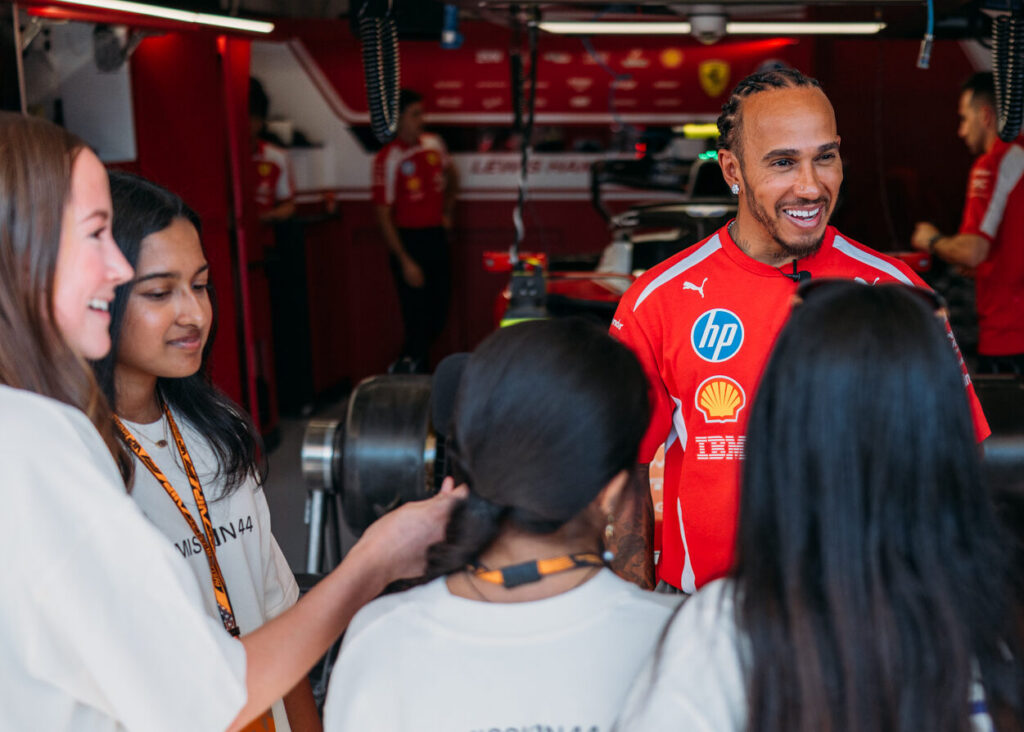
Hear more from Lewis

STAY INFORMED
Stay up to date on the progress of Igniting Inclusion and our mission to increase access to careers in Formula 1.