

JOIN OUR MISSION
Stay informed with partnership news, team updates, and stories from the young people driving social change.


In this blog, Yamina Bibi, Project Lead for our Increasing Diversity in ITT project, delivered in partnership with Being Luminary, Chartered College of Teaching and Chiltern Learning Trust, reflects on the recent meeting with Mission 44 Founder Lewis Hamilton, and the impact of the project on teacher recruitment practices.
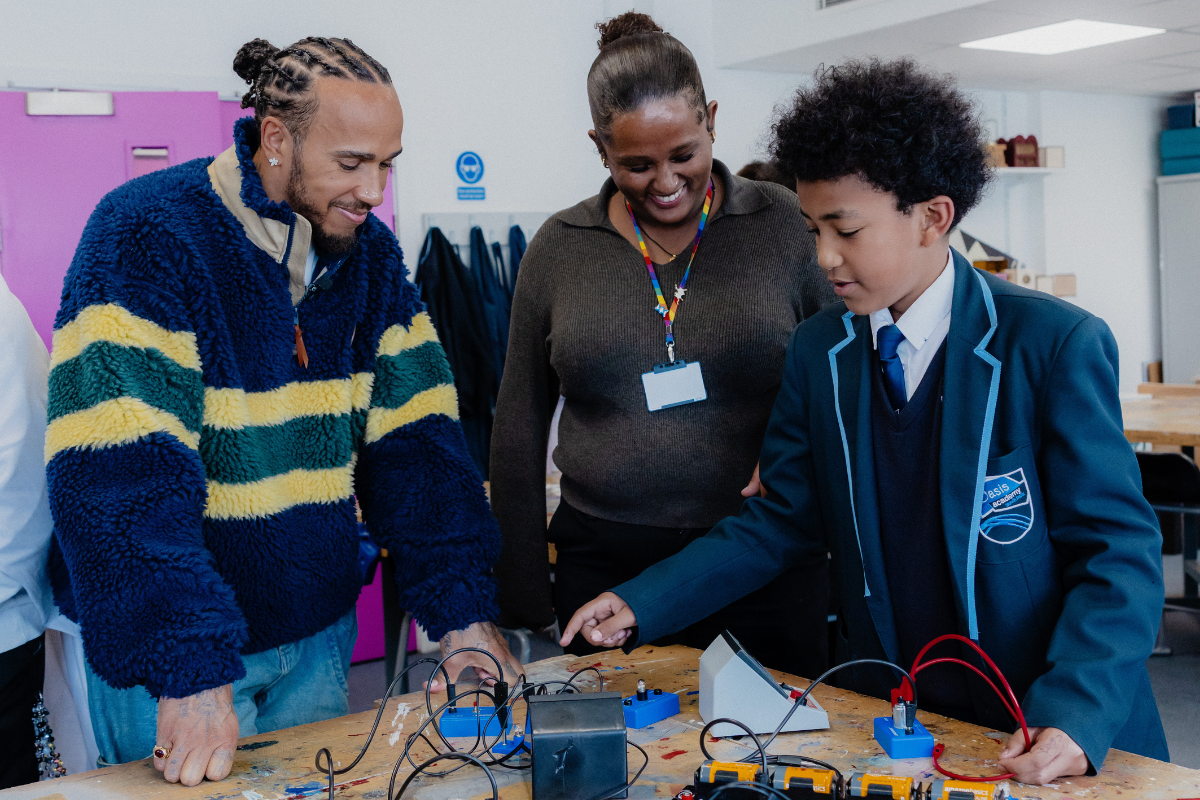
On Friday 15 May 2026, I was invited to join a special roundtable discussion hosted by Mission 44 at Oasis Academy South Bank, winner of the TES 2025 Secondary School of the Year award. The event brought together education partners and young people to reflect on the progress made since last year’s meeting with the Prime Minister and to explore what more needs to be done to create a truly inclusive education system.
What made the day especially memorable was that the discussion was chaired by Mission 44 CEO, Jason Arthur and attended by Mission 44 Founder, Sir Lewis Hamilton.
Throughout the discussion, young people spoke powerfully about the impact of trusted adults and the support they had received through Mission 44 funded programmes including CAPE, Coram, Milk Honey Bees and Oasis. It was moving to hear how the funding had empowered not only young people, but also the adults and organisations supporting them.
As Project Lead for the Increasing Diversity in ITT project, delivered in partnership with Being Luminary, Chartered College of Teaching and Chiltern Learning Trust, I had the opportunity to share how Mission 44’s Diversity in Education Fund has been instrumental in helping us move beyond conversations about diversity towards systemic change in Initial Teacher Training (ITT) and beyond.
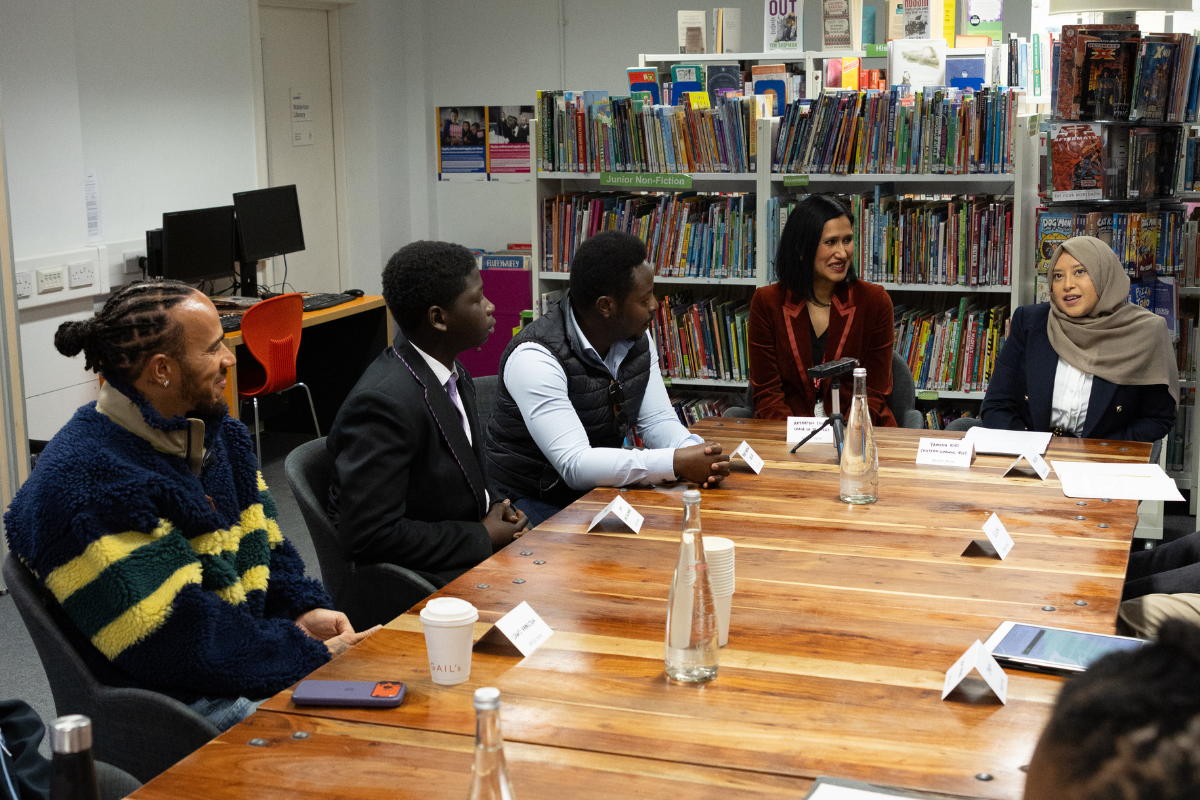
As I shared with Sir Lewis Hamilton and the other education partners at the roundtable, Mission 44’s funding is enabling us to achieve our goal of increasing the proportion of global majority teachers starting with trainee teachers in ITT. By having a diverse workforce, young people from global majority backgrounds will see themselves represented in classrooms and leadership spaces. This representation is not tokenistic; it is central to ensuring every student has a trusted adult who understands their heritage, identities and experiences.
One of the most significant aspects of the project has been our coaching work with School Centred Initial Teacher Training (SCITT) leaders across the country. Through anti-racist recruitment coaching, inclusive interview practice, policy reviews and support around retention and belonging, SCITTs have begun to actively change their systems and practices.
This has led to tangible organisational changes including revised recruitment processes, improved trainee support systems, inclusive mentor training and greater representation in marketing materials. Several SCITTs have also reported measurable increases in the recruitment of global majority trainees. One SCITT, for example, increased its proportion of global majority trainees from 7% at the start of the project to 10% this year.
Importantly, the impact is also being felt directly by trainees themselves. One trainee shared: ‘Knowing that my concern was taken seriously and resolved promptly reinforces the idea that inclusion is not only about classroom practice but also about fostering strong professional relationships and psychological safety.’ Comments like this demonstrate the importance of creating psychologically safe training environments where trainees feel heard, valued and supported.
Alongside the coaching programme, I confirmed the exciting news that the Increasing Diversity in ITT racial literacy online course, funded by Mission 44, had received positive feedback from sector experts and SCITT leaders and was launching publicly on Monday 1 June 2026.
Evaluation data from the pilot course has shown significant improvements in participants’ understanding and confidence. On a 5 point Likert scale, understanding of systemic barriers increased from 3.5 to 4.3, confidence in implementing anti racist practice increased from 2.8 to 4.1 while confidence in addressing microaggressions also improved from 3.3 to 3.9. Leaders described the course as ‘thought provoking’ and immediately actionable.
None of this would be possible without Mission 44’s support. The organisation has been critical through the credibility, national visibility and amplification it has provided. Through sector events, policy spaces and social media, Mission 44 has helped platform our work nationally and enabled conversations about inclusion to reach wider audiences across education, including the Department for Education.
While promoting the strength of the project, I also felt it was important to spotlight the barriers we faced, particularly as we navigated challenges around anti racist practice within our own organisations. I reiterated that systemic racism remains pervasive across the teaching profession, which we witnessed during recruitment for the Chartered Teacher Leadership Pathways. Some applicants were deliberately blocked from applying by executive leaders and told they were not ready.
Learning from this, for cohort 2 of Chartered Teacher Pathways, we adapted our communication strategy by directly addressing Headteachers and CEOs to advocate for colleagues in their organisations. This led to a significant rise in applications from global majority teachers and middle leaders.
What I hope came through from the conversation was that while we have made progress in increasing diversity within the teacher workforce and towards inclusion for young people, there is still work to be done.
This work is being driven by Mission 44’s commitment to inclusion as part of the Nothing Happens in Isolation campaign, which our consortium is proud to be part of.
The Increasing Diversity in ITT project is shifting sector conversations from ‘why diversity matters’ to ‘how we create systems where diverse educators thrive, lead and belong so that our young people have strong role models’. To find out more about the project, visit: https://chartered.college/diversity-itt-project/
Thank you to Sir Lewis Hamilton, Jason Arthur, Leicia, Laurie and Beatrice from Mission 44, Oasis Academy South Bank and all the young people and education partners for an unforgettable day.
Yamina Bibi,
Project Lead, Increasing Diversity in ITT project

USA

Outside of the USA